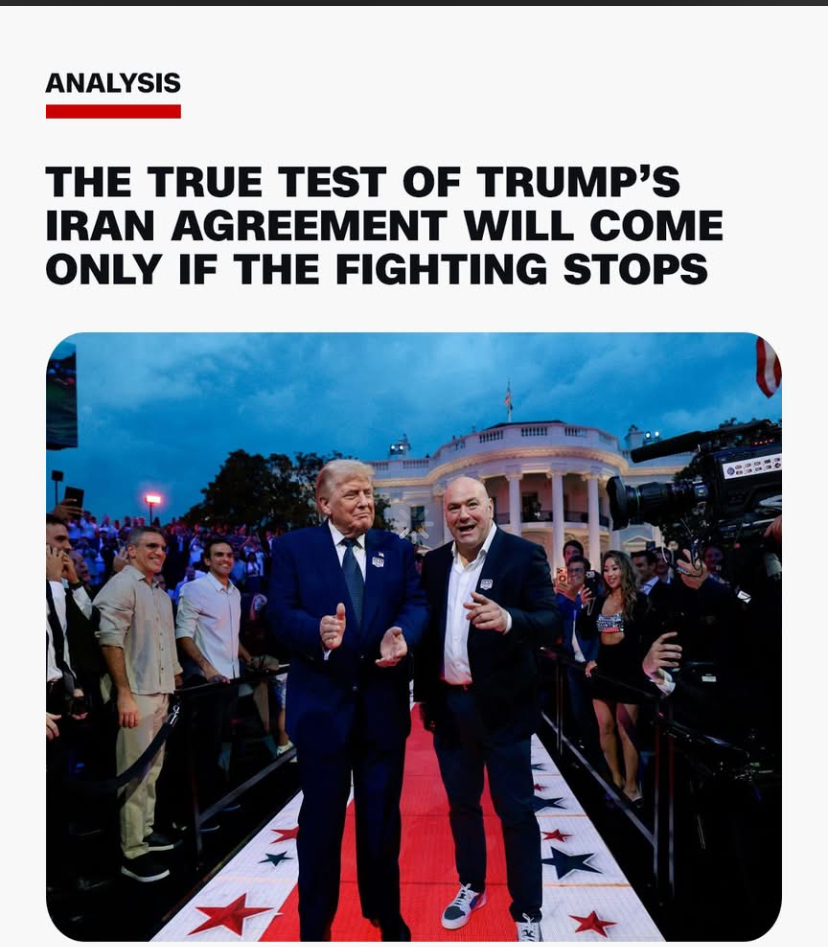
THE TRUE TEST OF TRUMP’S IRAN AGREEMENT WILL COME ONLY IF THE FIGHTING STOPS
3880
Questions continue to surround President Donald Trump’s newly announced agreement with Iran, as analysts and world leaders warn that the true success of the deal will depend entirely on whether the fighting in the Middle East actually comes to an end. While the White House has described the agreement as a major diplomatic breakthrough, critics argue that several key issues remain unresolved and that tensions could quickly return.
The agreement reportedly includes a temporary ceasefire framework, commitments related to reopening the Strait of Hormuz, and plans for further negotiations over Iran’s nuclear activities. However, the full terms of the deal have not yet been publicly released, creating uncertainty among international observers and financial markets. Iranian officials have also offered statements that at times differ from those coming from Washington. (Reuters)
President Donald Trump has presented the agreement as proof that his administration can end conflicts through pressure and negotiation. Speaking to reporters, Trump insisted that the deal would restore stability to the region and prevent Iran from developing nuclear weapons. Supporters of the administration praised the move as an opportunity to avoid a longer and more destructive war.
Despite the optimism from the White House, military activity and political tensions have continued across parts of the region. Analysts noted that ceasefires in previous stages of the conflict have repeatedly collapsed, with both sides accusing each other of violating agreements. Experts say the current framework will only succeed if armed confrontations truly stop and negotiations continue without escalation. (Council on Foreign Relations)
The situation surrounding the Strait of Hormuz remains one of the most sensitive aspects of the agreement. The strategic waterway is critical for global oil shipments, and disruptions there have already triggered sharp increases in energy prices worldwide. Financial markets reacted positively to the announcement of the deal, with oil prices falling and stock futures rising on hopes that tensions may ease. (MarketWatch)
Critics inside the United States and among American allies have questioned whether the agreement goes far enough in limiting Iran’s influence and military capabilities. Some foreign policy experts argue that major issues — including sanctions relief, proxy conflicts, and uranium enrichment — have merely been delayed for future negotiations rather than fully resolved. Others warned that announcing victory too early could weaken diplomatic credibility if violence resumes. (Investing.com)
International reactions have been mixed, with several governments welcoming any effort to reduce tensions while remaining cautious about the long-term durability of the deal. Diplomats in Europe and the Middle East stressed that the coming weeks will be crucial in determining whether the agreement can survive political disagreements and military pressure from hardliners on both sides.
For now, the world is watching closely to see whether the agreement marks the beginning of lasting peace or simply another temporary pause in a dangerous conflict. Analysts say the real measure of success will not be speeches, market reactions, or political headlines, but whether the guns fall silent and diplomacy finally replaces months of instability and warfare across the region. (Reuters)