G7 LEADERS – AND THE REST OF THE WORLD – WAIT FOR CLARITY ON US-IRAN AGREEMENT
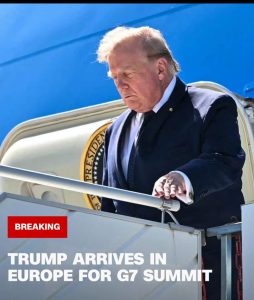
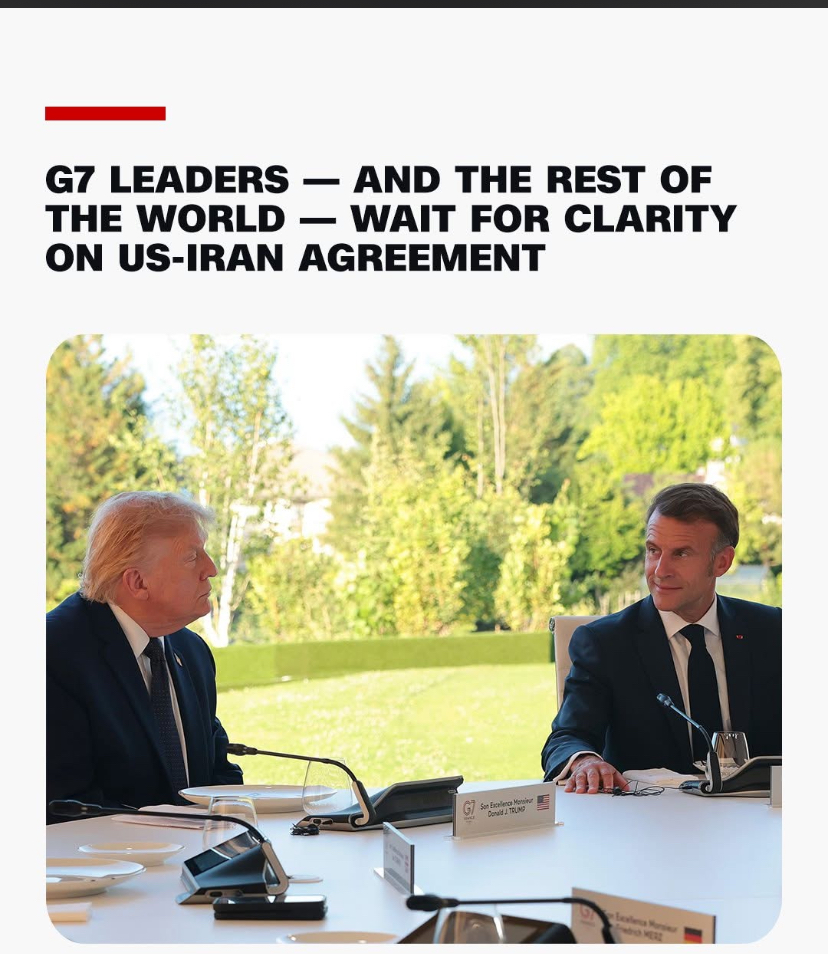
Leaders of the Group of Seven nations gathered in France on Tuesday amid growing uncertainty over the newly announced agreement between the United States and Iran, as governments around the world waited for details of the deal that President Donald Trump described as a major breakthrough for global security. The agreement, which was announced during the G7 summit in Évian-les-Bains, is expected to address tensions in the Middle East and reopen vital shipping routes in the Gulf. (The Guardian)
Although the White House has celebrated the agreement as a diplomatic victory, several world leaders said they still had not received full clarification on the terms of the memorandum signed between Washington and Tehran. Questions remain over how the agreement would be enforced, what role international allies would play, and whether Iran would fully comply with restrictions linked to its nuclear program. (The Wall Street Journal)
At the center of the discussions is the Strait of Hormuz, one of the world’s most important oil shipping routes. President Trump claimed the waterway would be fully reopened within days under the agreement, while U.S. officials warned that complete normalization could take longer because of ongoing security concerns and military operations in the region. (The Wall Street Journal)
European leaders reacted cautiously to the announcement, calling for transparency before offering full support. French President Emmanuel Macron said allies needed written confirmation of the agreement before any joint naval mission could begin in the Gulf. British Prime Minister Keir Starmer and German Chancellor Friedrich Merz also urged both Washington and Tehran to commit fully to long-term peace efforts. (New York Post)
The agreement reportedly includes plans for renewed nuclear negotiations, sanctions relief, and a phased easing of the U.S. naval blockade on Iranian ports. However, critics inside and outside the United States have questioned whether the framework resembles earlier nuclear agreements that faced strong opposition in previous years. Israeli officials have also reportedly expressed concern that the deal does not fully address Iran-backed militias and missile programs. (The Wall Street Journal)
Financial markets and global shipping companies have closely monitored the talks, hoping the agreement could reduce instability in energy supplies. Oil prices moved lower after reports suggested progress toward reopening trade routes, while major shipping firms said they were waiting for official confirmation before resuming normal operations through the Gulf region. (Discovery Alert)
Beyond the Iran issue, the G7 summit has also focused on the war in Ukraine, trade tensions, artificial intelligence, and global economic imbalances. President Trump said he would now turn his attention toward pushing for negotiations between Russia and Ukraine, while European allies continued discussions on military support for Kyiv and future sanctions against Moscow. (Reuters)
As meetings continue in France, diplomats say the coming days will be critical in determining whether the U.S.-Iran agreement becomes a lasting peace framework or another temporary pause in a long-running conflict. Until the full text is released and implementation begins, G7 leaders and much of the international community remain cautious, waiting for greater clarity on what could become one of the most significant geopolitical agreements of the year.