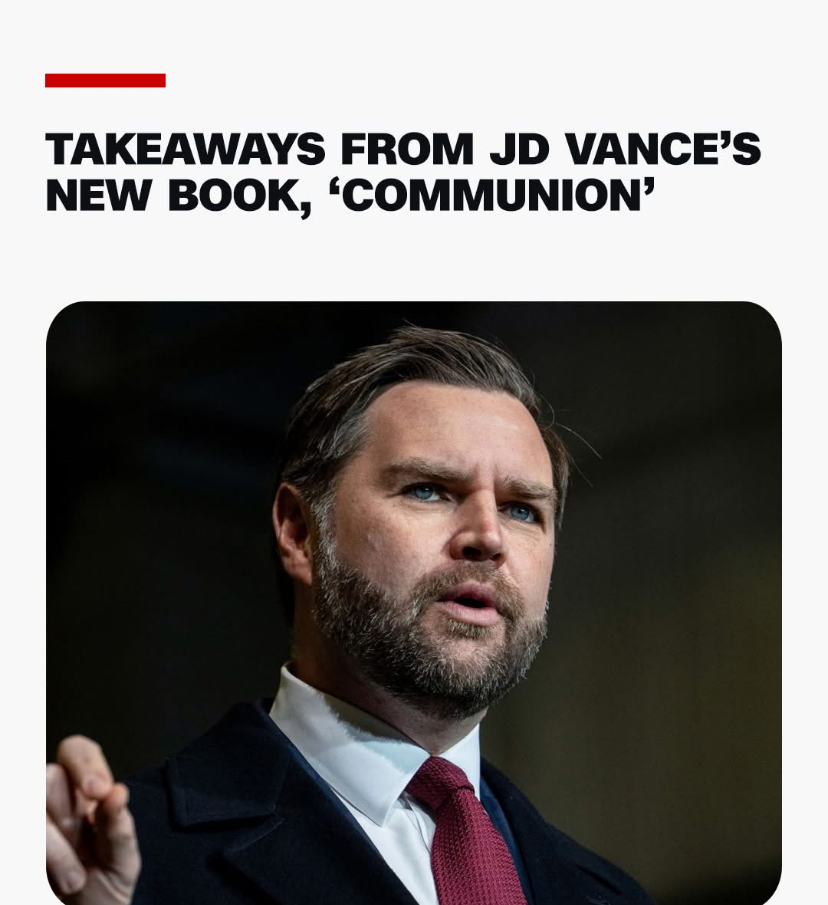
TAKEAWAYS FROM JD VANCE’S NEW BOOK, ‘COMMUNION’
Political circles across the United States are reacting strongly to the release of Vice President JD Vance’s new book, “Communion,” a publication that offers personal reflections, political observations, and insight into the conservative movement ahead of the 2026 election season. The book, released this week, quickly climbed bestseller charts and sparked intense debate among supporters and critics alike.
One of the major takeaways from the book is Vance’s argument that many Americans feel disconnected from institutions they once trusted. He writes extensively about declining confidence in government, universities, large corporations, and traditional media, claiming that ordinary citizens increasingly feel ignored by powerful elites in Washington and beyond.
The book also focuses heavily on family, religion, and community life. Vance argues that stronger local communities and religious values are essential to rebuilding American society. In several chapters, he describes his upbringing in Ohio and how family struggles shaped his political beliefs and views on economic hardship in working-class communities.
Another key theme in “Communion” is America’s changing role in global affairs. Vance questions long-term foreign military involvement and argues that the United States should focus more on domestic economic stability and border security. Analysts say the book gives a clearer picture of how he could influence future Republican foreign policy discussions.
Immigration and manufacturing are also central topics in the publication. Vance criticizes trade policies that moved jobs overseas and calls for renewed investment in American factories and industrial towns. He argues that rebuilding domestic production would strengthen both the economy and national security at a time of growing global competition.
The book has also drawn attention because of its comments on technology and social media. Vance warns that modern digital culture is contributing to loneliness, political division, and declining social trust. He urges lawmakers to place greater scrutiny on large technology companies and their influence over public discourse and young people.
Democrats and liberal commentators have criticized parts of the book, arguing that some of Vance’s proposals are overly nationalist and divisive. However, conservative supporters have praised the publication as a direct and relatable account of frustrations shared by many middle-class Americans who feel disconnected from political leaders.
As “Communion” continues to dominate political conversations, analysts believe the book could strengthen JD Vance’s national influence within the Republican Party. With the 2026 midterm elections approaching and speculation already building about the 2028 presidential race, many observers see the publication as more than just a memoir, but also a statement of political ambition.